The backyard power setup that cuts the cord on rising energy bills
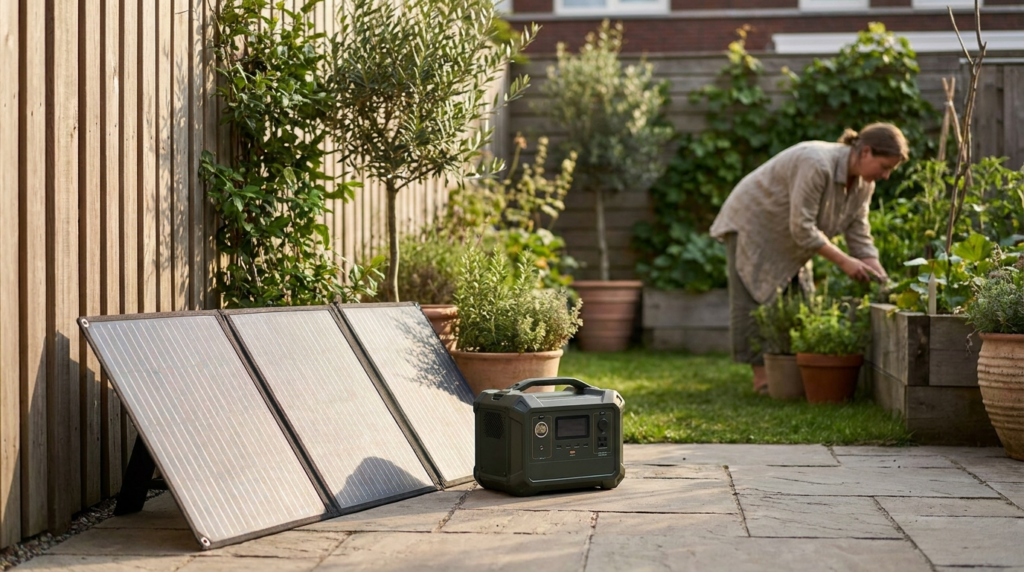
A backyard power setup usually means one or more portable solar panels connected to a portable power station, which is a large rechargeable battery with built-in outlets. During the day the panels recharge the battery. The stored power can then run essentials such as phones, laptops, lights, a router or a fridge for a limited time, during an outage or to shift some daily use off the grid. It does not replace a full rooftop system, but it is a low-commitment way to start producing some of your own power.
Energy bills have a way of climbing quietly until one month they make you wince. That sting is pushing a wave of homeowners to look at producing some of their own power, right in the backyard.
You don’t need a full off-grid compound to feel the difference. A compact solar panel paired with a portable power station can keep essentials running through an outage and shave a noticeable slice off your monthly bill.
How does a backyard solar setup work?
- Solar panel: converts sunlight into electricity. Portable panels are rated in watts (W), for example 100 W or 200 W.
- Power station: stores that electricity in a battery rated in watt-hours (Wh), for example 1,000 Wh. It has a built-in charge controller and inverter, so you can plug devices straight in.
- Your devices: draw power from the station through its AC outlets, USB ports or car socket.
Because a portable power station is not wired into your home’s electrical panel, it is plug-and-play. A permanent grid-connected system is different: it needs an installer and approval from your utility.
How much power can it actually produce?
A quick way to estimate output: panel watts multiplied by peak sun hours. Peak sun hours depend on where you live and the season, and real output is usually lower than the rating because of heat, angle and cloud.
| Setup (example) | Ideal daily output at 4 peak sun hours | What that could cover |
|---|---|---|
| 1 × 100 W panel | Up to about 400 Wh | Charging phones, a laptop, LED lights and a Wi-Fi router |
| 2 × 200 W panels | Up to about 1,600 Wh | The above plus a fridge for part of the day, or a small chest freezer |
| 4 × 200 W panels + large station | Up to about 3,200 Wh | Several essentials through a longer outage |
To size your setup, add up the watt-hours of what you want to run: a device’s wattage multiplied by the hours you use it. The label or manual lists the wattage. Fridges vary a lot by size and age, so check the yearly kWh figure on yours and divide it by 365.
What should you look for when buying?
- Battery capacity (Wh): how much energy it stores.
- Inverter output (W): the most it can power at once. It must be higher than the combined wattage of everything you plug in.
- Battery chemistry: LiFePO4 (lithium iron phosphate) batteries are known for long cycle life.
- Solar input limit: the maximum panel wattage the station accepts.
- Pass-through charging: lets the station power devices while it recharges.
Is a backyard solar setup worth it?
It is worth it if you want backup power for outages, use power outdoors, or want to start small before committing to rooftop solar. If your main goal is cutting a large monthly bill, a bigger rooftop system usually saves more over time, but it costs much more up front. Many people start with a portable setup to learn their actual usage first.
We broke down how these setups actually work, what they realistically cover, and how to start small without sinking thousands into hardware you may not need.
See how to start dominating your energy bill.
Backyard solar power: frequently asked questions
Usually not. Portable setups are best for essentials such as lights, phones, a router and a fridge for a limited time. Powering a whole home needs a much larger permanent system.
Roughly the panel wattage multiplied by peak sun hours. With 4 peak sun hours, that is up to about 400 Wh a day in ideal conditions. Real output is usually lower.
A portable panel that charges a stand-alone power station is not connected to the grid, so it does not normally need utility approval. Grid-connected systems do. Check local rules if you live in a rented home or a building with an HOA.
Add up the watt-hours you need: each device’s wattage multiplied by the hours you will use it. Choose a station with more capacity than that total and an inverter rated above the combined wattage you will run at once.
It can trim it if you regularly run devices from solar-charged batteries instead of the grid. The savings depend on how much you shift and your electricity rate. For large savings, rooftop solar is usually more effective.