Why woodworking is the calm, useful hobby everyone is rediscovering

Woodworking is a good hobby for beginners because it is calm and practical, and you can learn it in stages. You can start with a saw, a drill, clamps, sandpaper and wood glue, build a simple shelf or box in a weekend, and work up to furniture as your cuts get more accurate. The benefits people mention most are focus, stress relief away from screens, and a useful object at the end of every project.
In a world of screens and instant everything, more people are reaching for something slower and more tactile. Woodworking sits right at that intersection of craft, focus, and the quiet satisfaction of building something real with your hands.
Why is woodworking such a satisfying hobby?
Woodworking gives you a clear start, a clear finish and a result you can touch. That loop of plan, cut, assemble and finish is rewarding in a way that most screen-based downtime is not. The main benefits:
- Focus. Measuring, marking and cutting take your full attention. Many hobbyists say that is exactly why the shop feels calming.
- Visible progress. Each project is better than the last, and you can see the improvement in your joints and finishes.
- Useful results. Shelves, cutting boards, planters and benches get used every day, or make good gifts.
- Physical activity. Sawing, sanding and moving boards keep you on your feet instead of on the couch.
- Problem solving. Working out how parts fit together builds patience and practical thinking.
What tools do you need to start woodworking?
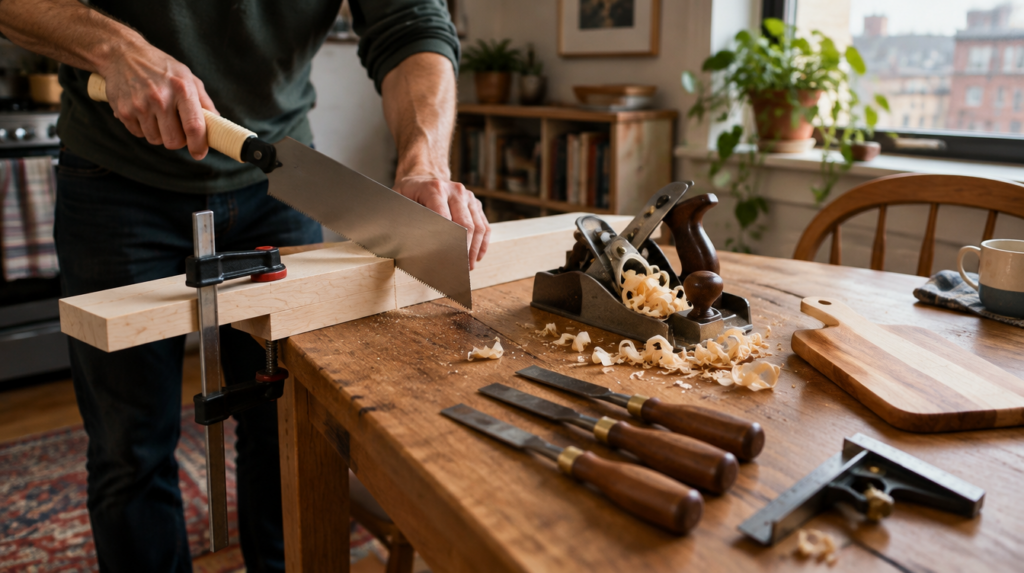
You do not need a full workshop. A small corner of a garage, balcony or spare room is enough for hand-tool and small power-tool projects. This starter kit covers most beginner plans:
| Tool | What it is for | Beginner tip |
|---|---|---|
| Tape measure and combination square | Accurate measuring and square lines | Measure twice, cut once |
| Hand saw or circular saw | Cutting boards to length | Clamp the board before you cut |
| Cordless drill/driver | Pilot holes and screws | Drill a pilot hole to stop splits near the ends |
| Clamps (at least 4) | Holding parts while glue dries | You will always want more clamps |
| Sandpaper (80, 120, 180, 220 grit) | Smoothing surfaces | Work through the grits in order, never skip more than one |
| Wood glue | Strong joints | Wipe away squeeze-out before it dries |
| Safety glasses and hearing protection | Protecting eyes and ears | Wear them for every power-tool cut |
Which wood is best for beginners?
Start with softwoods such as pine. Pine is inexpensive, widely available and easy to cut, but it dents more easily than hardwood. Once your cuts are accurate, move to hardwoods such as oak, maple or walnut for pieces that need to last.
One detail surprises many beginners: lumber is sold by nominal size. A board sold as a “2×4” actually measures about 1.5 by 3.5 inches, and a “1×6” is about 0.75 by 5.5 inches. Always check the real dimensions before you follow a plan.
What are good first woodworking projects?
- A simple wall shelf: two or three straight cuts and a few screws. It teaches measuring and keeping things level.
- A cutting board: it teaches glue-ups, clamping, sanding and a food-safe finish.
- A planter box: it teaches square corners and repeating cuts at the same length.
- A step stool: your first project that has to carry weight. It teaches strong joints.
- A small side table: it brings together everything above and gives you real furniture to keep.
How long does it take to get good at woodworking?
Most beginners can finish a simple shelf or box in their first weekend. With regular practice, say one project every week or two, many people build a solid small table within a few months. What helps most is not talent but good plans: the kind that show each step, measurement and joint clearly enough that you never have to guess.
The barrier to entry is lower than most assume. With a handful of basic tools, a small space, and a clear plan, a beginner can move from wobbly first cuts to furniture they are proud to keep, often within a few weekends.
Common beginner mistakes to avoid
- Cutting before checking that the board is straight and the end is square.
- Forgetting the saw blade width (the kerf) when marking several parts on one board.
- Rushing the glue: most wood glues need clamping for about 30 to 60 minutes and a full day to cure before stress. Check the label on yours.
- Skipping pilot holes, which splits the wood near the ends of the board.
- Applying finish over dust. Wipe the surface clean after the final sanding.
The difference between frustration and flow usually comes down to good plans, the kind that show each step, measurement, and joint clearly enough that you never have to guess.
Explore our favorite step-by-step woodworking plans.
Woodworking for beginners: frequently asked questions
Yes. You can start with a few hand tools and a small space, finish a simple project in a weekend, and improve with every build. Starting with clear, step-by-step plans makes the learning curve much gentler.
The benefits people mention most are focus and stress relief away from screens, a sense of accomplishment, light physical activity, practical problem solving, and useful objects for the home or as gifts.
A corner of a garage, a balcony or a spare room is enough for hand tools and small power tools. A sturdy workbench or table, good light and some storage for clamps are the essentials.
Pine is the usual choice for beginners because it is affordable, easy to find and easy to cut. Move to hardwoods such as oak or maple once your cuts are accurate.
No. A saw, a drill, a square, clamps, sandpaper and glue cover most beginner projects. Buy bigger tools later, once you know which projects you enjoy.