Anti-aging cream without retinol: what works instead
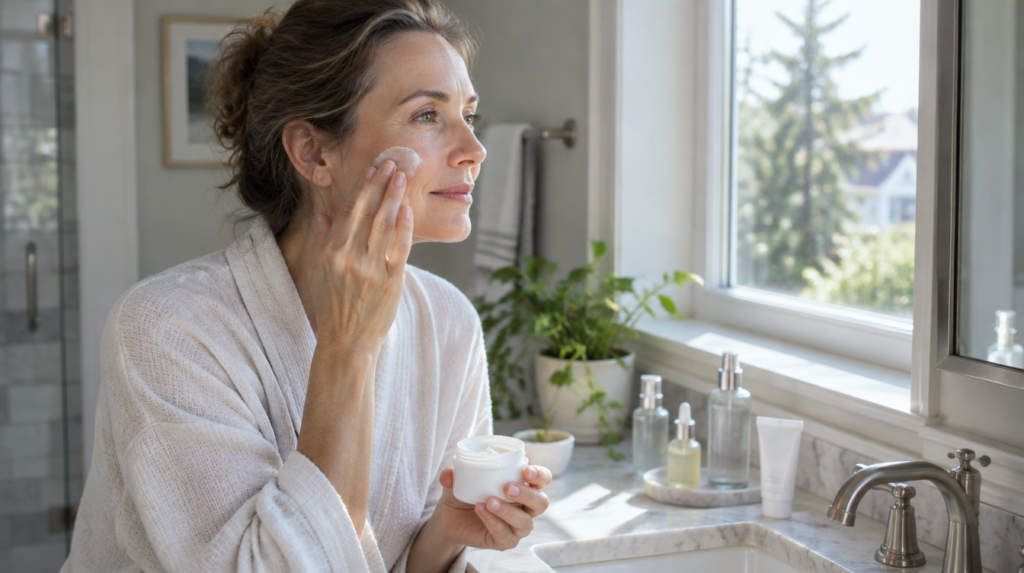
It usually happens around week two. Your cheeks sting when you wash your face, the skin beside your nose starts to flake, and the retinol bottle slides to the back of the cabinet. The American Academy of Dermatology tells new users to start with the mildest formula every other night for exactly this reason, and it says people with dry, allergy-prone or very red skin are probably not good candidates at all.
So does an anti aging cream without retinol actually do anything? Yes, within limits. Two ingredients have controlled trials behind them: bakuchiol, which matched retinol on wrinkles in a 12-week head-to-head study, and peptides such as palmitoyl pentapeptide-4, which beat a plain moisturizer in a 93-woman trial. Add a daily SPF 30 and you have a routine that does most of what retinol does, more slowly and with far less irritation.
Disclosure: Let’s Check It Now may earn a commission or have a business relationship with brands mentioned in this article. This never changes what we recommend.
Bakuchiol has the closest thing to a fair fight with retinol
Bakuchiol is a plant compound taken mostly from the seeds of babchi, Psoralea corylifolia. It is not a retinoid chemically, but it is often described as acting on skin in a similar way, and it is the one alternative that has been tested directly against retinol instead of against nothing.
The study that made its name was published in the British Journal of Dermatology. Researchers led by Dr. Raja Sivamani at the University of California, Davis gave 44 volunteers either a 0.5% bakuchiol cream twice a day or a 0.5% retinol cream once a day for 12 weeks. According to the British Association of Dermatologists’ summary, both groups saw a significant drop in wrinkle surface area and dark spots, with no statistical difference between them. The retinol group reported more scaling and stinging. On dark spots, 59% of the bakuchiol group improved by week 12, compared with 44% of the retinol group.
That is encouraging, and we would still read it with some care. Forty-four people is a small trial, and one study is not a body of evidence. What it does show is that bakuchiol is a reasonable first choice if retinol has already burned you once.
Peptides work slowly, but the research is real
Peptides are short chains of amino acids. The best studied one in skin care is palmitoyl pentapeptide-4, often sold under the trade name Matrixyl. It is meant to signal skin cells to make more collagen, which is a big promise, so the trial matters more than the theory.
In a 12-week split-face study of 93 women aged 35 to 55, published in the International Journal of Cosmetic Science, a moisturizer with a tiny amount of the peptide improved fine lines and wrinkles more than the same moisturizer without it. Both measurement software and expert graders saw the difference, and the cream was well tolerated.
The honest takeaway is that peptides give measurable but modest results. They will not do what a prescription retinoid or a filler does. They also rarely cause trouble, which is why we like them for sensitive skin and for anyone who wants to add one active without restarting the irritation cycle.
Sunscreen still does more than any night cream
This is the part most anti-aging shopping skips. The AAD says dermatologists agree that sunscreen and moisturizer are the two most effective anti-aging products you can buy. Its guide to choosing anti-aging products asks for three things on the label: broad spectrum, SPF 30 or higher, and water resistance. If your skin is sensitive, it suggests a mineral formula with zinc oxide or titanium dioxide.
A $15 drugstore sunscreen worn every morning will protect more collagen than a $90 peptide cream worn every night with no sun protection. If your budget only covers one product this month, buy the sunscreen.
How the retinol-free options compare
Prices below are typical US retail ranges, not quotes for any one brand. The point of the table is to match the option to your skin before you spend anything.
| Option | Best evidence | Typical price | Good for | Watch out for |
|---|---|---|---|---|
| Bakuchiol serum or cream | 12-week trial vs retinol, 44 people | $15 to $60 | Fine lines and dark spots, retinol quitters | Small evidence base so far |
| Peptide serum (palmitoyl pentapeptide-4) | 12-week trial vs placebo, 93 women | $20 to $100 | Sensitive skin, slow steady change | Modest results, needs months |
| Broad-spectrum SPF 30+ | AAD top recommendation | $12 to $35 | Everyone, every morning | Only works if you reapply outdoors |
| Glycolic acid night cream | Long clinical use for texture | $15 to $70 | Rough texture, dullness | Can sting, raises sun sensitivity |
| Prescription tretinoin | Strongest evidence of all | Varies with insurance | Deeper wrinkles, under a doctor’s care | It is a retinoid, so it is off the table here |
What we would skip
Creams that list collagen as the hero ingredient. Collagen is a large protein, and in a jar it mostly works as a moisturizer. We would not pay a premium for the word on the label.
Anything that promises Botox results without a needle, or ten years off your face. The AAD calls promises like these too good to be true and says anti-aging creams deliver modest results. That matches the trials above, where the real gains were measured in percentages over months.
Stacking five new actives in one week. The AAD advises tackling one concern at a time, partly because layering many products is how irritation starts. If you switch from retinol to bakuchiol, a peptide serum, vitamin C and an acid toner all at once, you will not know which one helped or which one made your skin red.
And the most expensive jar on the shelf by default. The AAD says effective products come in every price range. Price tells you about packaging and marketing far more often than it tells you about results.
Building a gentler routine you will keep using
A routine only works if it survives a busy Tuesday. This is the version we would start with, and it takes about four minutes a day.
- Morning: rinse or use a gentle cleanser, then moisturizer, then broad-spectrum SPF 30 or higher.
- Evening: cleanse, then one active only, either a bakuchiol product or a peptide serum, then moisturizer.
- After six weeks with no irritation: add a second active, such as a peptide serum in the morning under sunscreen.
- At twelve weeks: compare photos and decide what stays.
If you would rather buy matched products than assemble them yourself, the Dead Sea anti-age routine from Skin Dead Sea is one option built around peptides rather than retinol. It costs $199 for four steps: a cleansing mousse, a serum that the company says contains three peptides including Matrixyl, plus vitamin C and hyaluronic acid, a day cream and a night cream. Skin Dead Sea positions it for dry to very dry, aging skin.
Two details matter before you order. The brand lists a vitamin A complex in the day cream, so if you are avoiding every form of vitamin A, for example during pregnancy, ask the store for the full ingredient list first. And the night cream contains glycolic acid, which can sting reactive skin and makes daily sunscreen even more important, since the day cream is not sold as a sunscreen. Oily or acne-prone skin is better served elsewhere. We go through each step in our review of the black caviar anti-age routine.
If you are over 40 and want the wider picture, including what to keep and what to drop as skin gets drier, our skincare routine for women over 40 covers the full morning and evening order.
Is bakuchiol safe during pregnancy?
The honest answer is that nobody knows for certain. The AAD’s page on retinoids and retinol is clear that retinoids should not be used during pregnancy. Bakuchiol is not a retinoid, but it has not been studied much in pregnant women either. Many people simply pause new actives until after the baby arrives and lean on sunscreen and a plain moisturizer. Your OB or dermatologist is the right person to decide.
Give any cream twelve weeks, then judge it
Both trials in this piece ran for 12 weeks, and the bakuchiol results were strongest at the end. That is the realistic window. Judging a cream after ten days mostly measures how it feels, not what it changes.
Take a photo today, in daylight, facing the same window, with no makeup. Take another at six weeks and again at twelve. Mirrors adjust to us. Photos do not.
Start with the cheapest step tomorrow morning: a broad-spectrum SPF 30, every day, before you spend a dollar on any night cream.
This article is for general information and is not medical advice. If you have a skin condition, are pregnant or breastfeeding, or react to skin care products, talk to a dermatologist before starting a new routine.
Anti-aging cream without retinol: frequently asked questions
Bakuchiol has the strongest direct comparison. In a 12-week British Journal of Dermatology study of 44 people, 0.5% bakuchiol twice a day reduced wrinkles and dark spots about as well as 0.5% retinol, with less scaling and stinging. Peptides are a gentler second option with good placebo-controlled data.
Modestly. A 12-week split-face trial of 93 women found that a moisturizer with palmitoyl pentapeptide-4 improved fine lines and wrinkles more than the same moisturizer without it. Expect gradual change over months, not a filler-like result.
In the one head-to-head trial, the difference in wrinkle and pigment results was not statistically significant, and bakuchiol was easier to tolerate. The study was small, so it is fair to call bakuchiol a promising alternative rather than a proven equal.
Yes, and it is often the better route. Start with sunscreen and moisturizer, then add one active such as a peptide serum. The AAD suggests hypoallergenic products and, for sensitive skin, a mineral sunscreen with zinc oxide or titanium dioxide.
Plan on about 12 weeks. That is how long both key studies ran, and the bakuchiol results were most visible at the end. Compare daylight photos at the start, at six weeks and at twelve weeks.