Why Heels Crack in Winter, and the Fix That Actually Holds
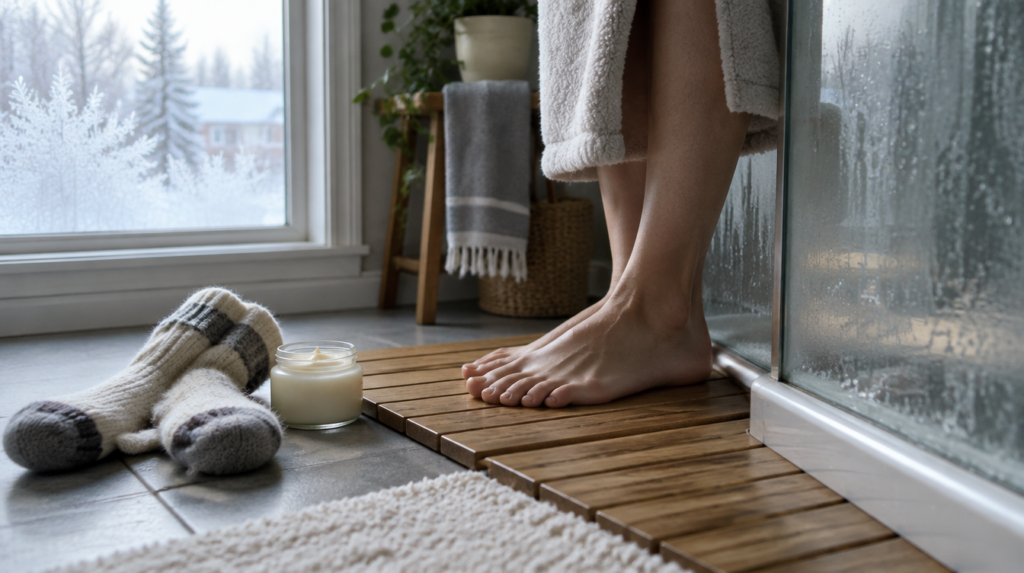
The first split usually shows up a few weeks after the furnace starts running. You step out of the shower, look down, and the rim of one heel has a thin white line that catches on the bath mat. By December it is a crack you can feel with every step. Cracked heels in winter are not a sign that you suddenly stopped looking after your feet. They are what happens when the thickest skin on your body dries out, loses its stretch, and then carries your full weight several thousand times a day.
The short answer to why heels crack in winter has two halves. Cold outdoor air and indoor heating pull water out of the skin, and the thick pad of skin around the heel is the first place that dryness turns into stiffness. Stiff skin under load splits. Fix the moisture and the pressure together and most cracks close within two to three weeks. Fix only one of them and the cracks come back in January.
Disclosure: Let’s Check It Now may earn a commission or have a business relationship with brands mentioned in this article. This never changes what we recommend.
Winter air starts the damage and your heating system finishes it
Cold air holds very little water. When a furnace, wood stove, or space heater warms that air inside your house, its relative humidity falls further, often well below the 30 to 50 percent range the EPA recommends for indoor spaces. Skin sitting in air that dry gives up moisture steadily, and the heel loses more than most places because it has few oil glands and a very thick outer layer that cannot replace water quickly.
The long hot shower you take to warm up makes it worse. The American Academy of Dermatology starts its cracked-heel advice with two habits: keep baths and showers to 5 to 10 minutes, and wash with a gentle fragrance-free cleanser so the feet keep their natural oils. Board-certified dermatologist Patrick Blake, MD, names cold, dry weather, walking barefoot, and long hot showers as the three most common winter triggers.
A space heater in a closed room is a skin dryer with a thermostat. We already worked out what a space heater costs to run in dollars. Your heels pay the rest.
The crack is a pressure injury, not just dry skin
This is the part most articles skip. Dry skin on your forearm flakes. Dry skin on your heel splits, and the difference is mechanical. Under the heel sits a fat pad that spreads sideways every time your foot lands. The skin around the rim of the heel has to stretch to allow that. Hydrated skin stretches. Dehydrated skin that has also thickened into callus does not, so it fissures along the edge where the stretch is greatest.
That explains why cracks cluster at the back and sides of the heel and why they get worse in open-backed shoes. Slippers, clogs, and slingbacks leave the fat pad unsupported, so it spreads more with every step, which is why the AAD lists flip-flops, slingbacks, worn-down shoes, and shoes that do not fit as footwear to avoid while heels heal. Long hours on hard floors, extra body weight, and very flat or very high arches load the same strip of skin.
Cleveland Clinic dermatologist Lindsey Moore, MD, adds a factor that gets little attention: age. Oil production drops, the skin thins, and years of sun on sandal-season feet all reduce the heel’s ability to hold water. The heel is also the one spot most people forget when they moisturize the rest of their body, so the driest skin gets the least help.
What we would do in the first two weeks
The routine dermatologists agree on is short, and the order of the steps matters more than the brand on the tube.
- Shower for 5 to 10 minutes in lukewarm water with a fragrance-free cleanser. Pat the feet dry instead of rubbing.
- Within 5 minutes, while the skin is still damp, apply a cream with 10 to 25 percent urea, or one built on alpha hydroxy acid or salicylic acid. These pull water into the skin and gradually soften the callus.
- At bedtime, cover the heels in plain petroleum jelly and pull on thin cotton socks. The socks keep grease off the sheets and hold the moisture against the skin.
- During the day, seal any open crack with a liquid bandage. It cuts the pain, keeps germs out, and lets the skin close underneath.
- Wear closed-back shoes with a cushioned heel until the cracks have closed, indoors included.
Expect visible change at about two weeks. Dr. Moore puts the timeline for exfoliating moisturizers at roughly two weeks of consistent use, and the clinical evidence points the same way. In a randomized, double-blind trial of 40 adults with diabetes and moderate to severe dry skin on both feet, a cream with 10 percent urea and 4 percent lactic acid applied twice a day for four weeks brought the average dryness score down from 6.13 to 3.19. The plain base cream used on the other foot only reached 4.38. The active ingredient did the work, not the act of rubbing something in.
Urea percentages, explained without the marketing
Urea is the ingredient worth understanding, because the number on the tube changes what the product does. Below about 10 percent it mainly acts as a humectant, drawing water into the outer skin. From 10 to 25 percent it starts loosening the bonds between dead cells, so callus softens over a couple of weeks. At 40 percent it works as a keratolytic that actively breaks down thick, hard skin, which is why podiatrists reach for it on heavy fissures and why it can sting on an open crack.
Our position: start at 10 to 25 percent, as the AAD suggests, and use it twice a day. Save 40 percent for a heel with a thick yellow rim of callus and no open or bleeding cracks. Cleveland Clinic lists both 20 and 40 percent over-the-counter urea creams as reasonable choices. Skip anything that promises results overnight. Heel skin turns over slowly, and a product that seems to work in one night is usually a thick occlusive sitting on top of the problem.
| Option | Best for | Typical cost | Our verdict |
|---|---|---|---|
| Petroleum jelly plus cotton socks at night | Sealing moisture in, any crack depth | $3 to $6 a jar | Do this no matter what else you use |
| Urea 10 to 25 percent cream | Mild to moderate dryness, early cracks | $8 to $15 a tube | The daily workhorse for most people |
| Urea 40 percent cream | Thick callus with closed cracks | $10 to $20 a tube | Effective, can sting, not for open or bleeding fissures |
| Mineral or ceramide foot cream, no exfoliant | Maintenance after cracks close, sensitive skin | $15 to $35 | Comfortable daily, but will not thin existing callus |
| Foot peel masks | Shedding thick dry skin over a week | $10 to $25 | Avoid with athlete’s foot, eczema, psoriasis, or any broken skin |
| Podiatrist debridement | Deep fissures, diabetes, cracks that keep returning | Varies by insurance, often covered when medically necessary | The right call when home care fails after three weeks |
Where a plain foot cream fits once the cracks close
Once the cracks have closed, the job changes from repair to maintenance, and this is where a cream without an exfoliating acid earns its place. Twenty percent urea every day from November to March is more than most feet need, and plenty of people dislike the smell and the tingle. A richer cream applied after the evening shower keeps the heel supple between flare-ups. The Dead Sea mineral foot cream from Skin Dead Sea is one we would put in this category: $17 for a 100 ml tube or $32 for 300 ml, built on Dead Sea minerals, glycerin, and shea butter rather than urea, so it suits the maintenance phase and sensitive skin but will not soften an existing callus on its own. If your heels are still cracked today, start with the urea step and come back to this later. We covered what the research says about Dead Sea minerals on skin separately.
Fixing the air in your house pays off beyond your feet
A bedroom humidifier is the one purchase we would make before any foot product. Holding the room inside the EPA’s 30 to 50 percent range for eight hours a night gives the skin a long stretch where it stops losing water. A $15 to $20 hygrometer tells you where you stand, and a heated home in January commonly reads below 30. Do not overshoot. Above 60 percent you trade dry heels for condensation and mold, which the EPA warns about on the same page.
The same logic applies to hands and face, which is why the moisturizer routine we recommend for dry skin over 40 leans on the same two moves: shorter, cooler showers and a cream applied while the skin is still damp.
When cracked heels are a medical signal
Most winter cracks are exactly what they look like. A minority are the first visible sign of something else, and the pattern gives it away. Cracks that also appear in summer, that do not respond to three weeks of the routine above, or that come with itching, scaling between the toes, or nail changes point to athlete’s foot, eczema, or psoriasis rather than dry air.
Diabetes raises the stakes. The CDC reports that about half of all people with diabetes have some form of nerve damage, most often in the feet and legs. Damaged nerves reduce sweating, so the skin dries faster, and they blunt pain, so a deep fissure can go unnoticed until it is infected. For that reason the CDC lists dry, cracked skin on the feet among the symptoms that call for a visit to your doctor right away rather than at the next scheduled appointment. It also advises against putting lotion between the toes, where trapped moisture invites infection.
Hypothyroidism also appears on the standard list of medical causes, alongside psoriasis and athlete’s foot, so persistent dry, cracked heels together with fatigue, weight gain, or feeling cold all the time are worth raising with your doctor. Both the AAD and Cleveland Clinic recommend a board-certified dermatologist if heels keep cracking after consistent home care, and sooner if there is bleeding, warmth, redness, or drainage.
Your next step tonight
Before bed tonight, take a five-minute lukewarm shower, pat your feet dry, and put a 10 to 25 percent urea cream on your heels while they are still damp. Cover with petroleum jelly, pull on cotton socks, and put a reminder in your phone to look at the heels again in 14 days. If a crack is bleeding or you have diabetes, make the call to your doctor first and start the routine after.
This article is for general information and is not medical advice. If you have diabetes, a thyroid condition, or a crack that bleeds or shows signs of infection, see a healthcare professional.
Cracked heels in winter: frequently asked questions
Cold outdoor air and indoor heating push humidity below the 30 to 50 percent the EPA recommends, and thick heel skin with few oil glands dries fastest. Dry heel skin loses its stretch and splits under the pressure of walking. In summer the same skin stays flexible.
With a 10 to 25 percent urea cream twice a day, petroleum jelly under socks at night, and closed-back shoes, most people see clear improvement in about two weeks. Deep fissures can take longer. If nothing changes after three weeks, see a dermatologist or podiatrist.
They do different jobs. Urea softens callus and draws water into the skin. Petroleum jelly seals that water in. Dermatologists recommend both: urea within five minutes of the shower, petroleum jelly with cotton socks at bedtime.
Yes. About half of people with diabetes have nerve damage, often in the feet, which reduces sweating and dries the skin while dulling pain. The CDC lists dry, cracked skin on the feet as a symptom to report to your doctor right away.
Yes, in moderation and only on skin that is not inflamed, itchy, or open. Cleveland Clinic says pumice stones, foot files, and callus shavers are fine when used as directed. Never file over a bleeding or sensitive crack.