Teeth whitening without damaging enamel: what is actually safe
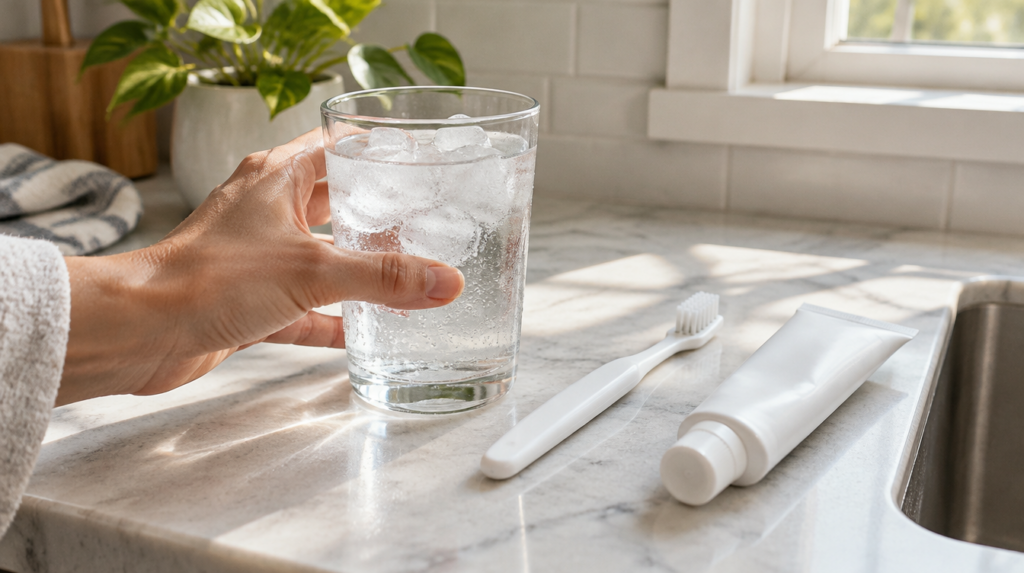
Most people who search this question have already had one bad week with whitening strips. The teeth looked a little brighter by day four, and then a sip of ice water sent a jolt through a front tooth. The natural next thought is that the strips were eating the enamel.
They almost certainly were not. Teeth whitening without damaging enamel is realistic for most adults, because the peroxide in mainstream whiteners passes through the enamel and works on stains in the layer underneath, and studies in real patients at normal strength have not found structural harm. The damage people worry about comes from habits around the product: leaving it on longer than the label says, whitening every day for months, reaching for acidic or gritty home remedies, and bleaching over cavities or receding gums that nobody has looked at.
Disclosure: Let’s Check It Now may earn a commission or have a business relationship with brands mentioned in this article. This never changes what we recommend.
What whitening actually does inside a tooth
Enamel is the hard, slightly see-through outer shell. Most of the color you see comes from dentin, the softer and naturally yellower layer below it. Coffee, tea, wine and years of ordinary life leave pigment molecules in both layers, and that is why teeth tend to look darker with age even when they are perfectly healthy.
Nearly every whitener that changes the shade of a tooth, rather than just polishing its surface, relies on one of two chemicals. Hydrogen peroxide does the work directly. Carbamide peroxide breaks down into hydrogen peroxide more slowly. The American Dental Association’s practice guidance puts the trade-off plainly: hydrogen peroxide works faster but carries a greater risk of sensitivity, while carbamide peroxide is slower and gentler.
That jolt from ice water is the nerve reacting, not the enamel dissolving. Dr. Edmond Hewlett of the UCLA School of Dentistry, speaking for the ADA, has described temporary sensitivity as the most common side effect dentists see from whitening. It usually settles once you stop or space out the treatments. We covered how to keep it to a minimum in our guide to teeth whitening without sensitivity, so here we will stay with the enamel question.
What the research says about enamel
The most reassuring study is also one of the oldest. In 2010 the Journal of the American Dental Association published work led by Milena Cadenaro at the University of Trieste. Her team followed 20 adults aged 22 to 43 who had their front teeth whitened with a 38% hydrogen peroxide gel, one of the strongest professional products on the market. Using replicas of the teeth and electron microscopy, they found no significant change in enamel surface roughness at any of the checkpoints.
The study that made headlines went the other way. In 2019 a team led by chemist Kelly Keenan at Stockton University in New Jersey presented lab work at a biochemistry meeting showing that hydrogen peroxide, at concentrations similar to whitening strips, broke down collagen in the dentin of extracted teeth. That sounds alarming, and it deserves attention. It was also a conference abstract on teeth that were no longer in anyone’s mouth, and even the coverage of it noted that nobody yet knew whether the effect matters in a living mouth or whether it is permanent.
Our read of the two is simple. The evidence of harm comes from lab dishes. The evidence of safety comes from people. Neither one says you can whiten as often and as long as you like. Strength, contact time and frequency are what move the risk, and those are the three numbers you control.
Strength, time and acid decide the outcome
Start with strength. According to the ADA, dentists use hydrogen peroxide at 15% to 43% in the chair, and they paint a protective barrier over the gums first. Custom take-home trays from a dentist usually hold 10% to 16% carbamide peroxide. Drugstore strips and gels sit lower than the in-office gels, which is why they take longer and why they are forgiving if you follow the box.
Time is where most people go wrong. If the instructions say 30 minutes, an hour is not twice the result. It is twice the exposure for the nerve and the gums, and the extra shade you were hoping for usually does not show up.
Acidity and abrasion are the real enamel threats, and they rarely come from peroxide products. Enamel does not grow back. Anything that scrubs it or softens it with acid, day after day, takes away a layer you will not get back, and thinner enamel lets more yellow dentin show through. That is the cruel irony of the lemon-and-baking-soda trick: it can make teeth look darker over time.
| Option | Active ingredient | Speed | Enamel and sensitivity picture | Our take |
|---|---|---|---|---|
| In-office whitening | 15% to 43% hydrogen peroxide (ADA) | 3 to 8 shades in 30 to 60 minutes, per the ADA | Strongest gel, but gums are shielded and a dentist watches the clock | Best for a fast change or heavy staining |
| Dentist custom trays | 10% to 16% carbamide peroxide | Gradual, over days to weeks | Gentler chemistry, trays fit well so less gum contact | The safest strong option for most people |
| Drugstore peroxide strips and gels | Hydrogen or carbamide peroxide | Gradual | Sensitivity is common if you overuse them | Fine if it carries the ADA Seal and you follow the timer |
| Peroxide-free powders and strips | Usually PAP, a non-peroxide oxidizer | Gradual | Fewer complaints about sensitivity, thinner independent research | A reasonable pick for sensitive teeth and surface stains |
| Whitening toothpaste | Mild abrasives, sometimes low peroxide | Slow, surface stains only | Low risk at normal brushing pressure | Good for upkeep, not for changing your shade |
| Charcoal powder and DIY acid scrubs | Abrasive grit, lemon or vinegar | Looks quick, fades | Scrubs or softens enamel that never grows back | Skip |
What we would skip
Charcoal powders are first on our list. They feel effective because your teeth look cleaner right after brushing, but the effect is surface polish, and the grit is doing the work. If you already have thin spots near the gumline, that is the last place you want sandpaper.
We would also skip the kitchen hacks: lemon juice, apple cider vinegar, strawberries mashed with baking soda. Every one of them pairs an acid with a scrub. The result is a brief brightness and a long-term loss of the layer that keeps teeth white in the first place.
Third, unlabeled high-strength gels sold through marketplaces with no ingredient percentage on the box. If a seller will not tell you what is in it and how strong it is, you cannot judge the dose, and dose is the whole safety question. The ADA’s advice is to look for its Seal of Acceptance, which means the maker submitted data on safety and results.
Finally, stacking. Strips in the morning, a whitening pen at lunch and a whitening rinse at night adds up to far more exposure than any one label assumes. Pick one product, finish the course, then stop.
If strips leave your teeth aching
Some people do everything right and still cannot get through a box of peroxide strips. For them, the sensible order is a desensitizing toothpaste for two weeks, then a lower-strength carbamide product or shorter wear times, and only then a different chemistry.
That different chemistry is usually PAP, short for phthalimidoperoxycaproic acid, which oxidizes stains without peroxide. Most of what has been published on it so far is lab work on extracted teeth rather than long trials in people, so we treat it as a gentle option for coffee and tea staining, not as a match for what a dentist can do. One example we looked at is PurelyWhite Deluxe, a peroxide-free whitening powder that you brush on for two minutes a day. The company says its PAP+ formula is enamel-safe and does not cause sensitivity, and it is listed at $19.99. It suits someone with everyday yellowing who gave up on strips because of the zingers. It will not change the color of crowns, veneers or fillings, and it is the wrong tool for deep gray staining, which needs a dentist.
How to whiten at home and keep your enamel
- Get a checkup first if you have cavities, exposed roots, receding gums or crowns on your front teeth. Bleaching over a cavity hurts, and restorations will not change color, so a dentist can tell you what will end up mismatched.
- Choose one product with a stated active ingredient and percentage, ideally one with the ADA Seal.
- Brush with a toothpaste for sensitive teeth for a week or two before you start and while you whiten.
- Follow the wear time to the minute and do not combine products.
- Stop and call your dentist if sensitivity lasts beyond a few days after you finish.
- Protect the result by cutting back on the stainers the ADA lists: coffee, tea, red wine, soda, dark berries and dark sauces, plus smoking.
Stains whitening will not fix
Whitening works on yellow and brown discoloration from food, drink and age. It does much less for gray or blue-gray tones, white spots, or a single dark tooth after an old injury, and it does nothing at all to porcelain or composite. If your real problem is chips, gaps or a crown that no longer matches, whitening is the wrong tool. We walked through the cosmetic cover-up route, and its limits, in our look at snap-on veneers pros and cons.
Before you buy anything new, take two minutes with what is already in your bathroom cabinet. Find the active ingredient and its percentage on each whitening product and the wear time. Keep the one product with clear numbers you can follow, and throw out anything that lists no strength at all.
This article is for general information and is not medical or dental advice. If you have tooth pain, gum disease or dental work on your front teeth, talk to your dentist before whitening.
Sources: ADA News, Diving into teeth whitening options. DrBicuspid on the 2010 JADA enamel study. CNN via WTOP on the 2019 Stockton University research.
Teeth whitening without damaging enamel: frequently asked questions
Not when it is used as directed. A 2010 study in the Journal of the American Dental Association found no significant change in enamel roughness in 20 adults after whitening with a 38% hydrogen peroxide gel. Damage is more likely from acidic or abrasive home remedies and from overusing products.
Peroxide moves through the enamel and can irritate the nerve inside the tooth. ADA spokespeople describe this sensitivity as the most common side effect and usually temporary. Shorter wear times and a toothpaste for sensitive teeth help. See a dentist if it lasts more than a few days after you stop.
Peroxide-free products, usually based on PAP, tend to cause less sensitivity. The independent research is still small and mostly lab-based, so treat them as a gentler option for surface stains rather than a replacement for professional whitening.
Finish one course as the label describes, then stop, and only repeat when the stains return, following the same label limits. Using several whitening products at the same time, or whitening every day for months, adds exposure without adding much brightness.
We would skip it. Charcoal works by abrasion, so it polishes the surface rather than changing the shade, and enamel that is scrubbed away does not grow back. A regular fluoride toothpaste and a product with the ADA Seal are better choices.