Teeth whitening without sensitivity: what actually works
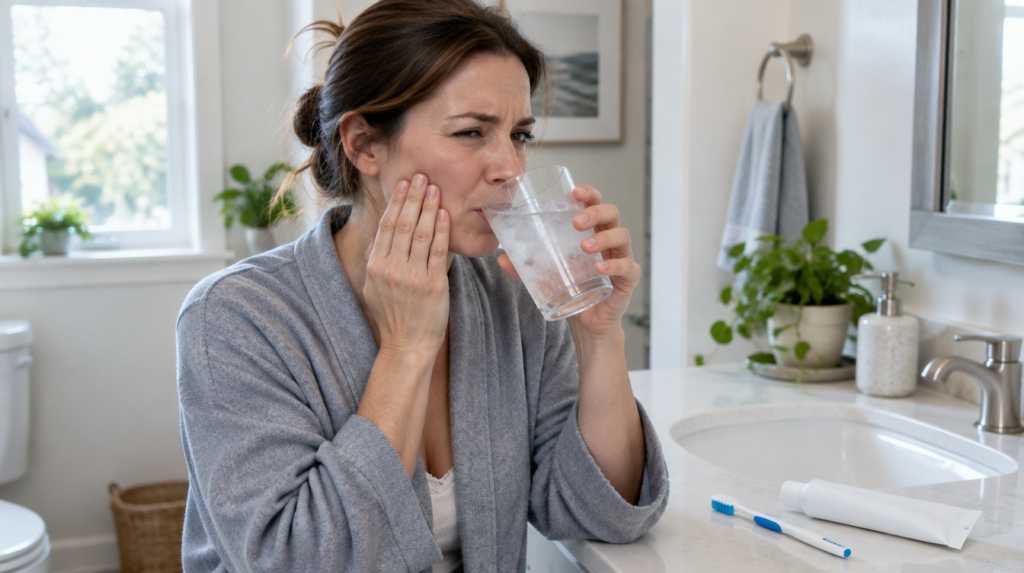
It usually starts on day two. You put on a whitening strip, nothing much happens, and then a glass of ice water sends a sharp zap through one of your front teeth. For a lot of people that is where the whitening project ends, with half a box of strips going stale in the bathroom drawer.
Teeth whitening without sensitivity is realistic for most people, but it rarely comes from buying a stronger product. It comes from less peroxide exposure, a desensitizing toothpaste started before you whiten, a slower schedule and, for some people, a peroxide-free formula. The American Dental Association explains the mechanism plainly: the ache happens when peroxide gets through the enamel to the softer dentin underneath and irritates the nerve. Reduce that exposure and you remove most of the pain.
Disclosure: Let’s Check It Now may earn a commission or have a business relationship with brands mentioned in this article. This never changes what we recommend.
Why whitening makes teeth ache in the first place
Peroxide is good at its job because it travels. It moves through enamel and breaks apart the stain molecules sitting inside the tooth. The same ability to travel is what carries it toward the nerve. That is why the sensitivity tends to feel deep and sudden rather than like sore gums.
The ADA describes this sensitivity as usually temporary. It also warns that overusing whitening products can damage enamel or gums, which is the part people tend to skim past when they are chasing one more shade before a wedding or a job interview.
Two levers decide how much peroxide reaches the dentin: concentration and contact time. A strong gel for ten minutes and a weak gel worn for an hour can both overload a tooth that was already a little sensitive. Most of the fixes below simply pull one of those two levers back.
What lowers the risk, in the order we would try it
None of these steps is exotic, and the first two cost less than a box of strips. We would stack them before spending money on anything new.
- Switch toothpaste first. Use a toothpaste with potassium nitrate for a couple of weeks before you start, and keep using it while you whiten.
- Whiten every other day. Same total number of sessions, more recovery time between them.
- Never exceed the wear time on the label. Longer does not mean whiter. It means more peroxide sitting against the tooth.
- Stop at the first zing. Take two or three days off, then restart at the slower pace instead of pushing through.
- Change the formula if the pain keeps coming back. A lower concentration, or a peroxide-free product, is the next move.
The toothpaste step has better backing than most people assume. A 2015 meta-analysis by Wang and colleagues pooled 10 clinical trials with 394 patients and found that using potassium nitrate or sodium fluoride during bleaching cut the odds of reporting sensitivity by more than half, with an odds ratio of 0.45, according to the National Elf Service summary of the review. The same review could not show a consistent effect on how much whiter the teeth got.
Read that second finding carefully. The desensitizer takes the edge off, and there is no clear sign that it slows your results. The authors also noted that the trials varied a lot in concentrations and schedules, so treat the number as a direction rather than a promise.
Peroxide-free whitening: what PAP can and cannot do
The peroxide-free products you see advertised mostly rely on PAP, short for phthalimidoperoxycaproic acid. It oxidizes stains without producing the free radicals that hydrogen peroxide generates, and researchers link those free radicals to sensitivity and gum irritation. On paper, that is exactly what a sensitive mouth wants.
The evidence is promising but thin. In a 2021 lab study published in Dentistry Journal, Pascolutti and de Oliveira reported that a PAP+ gel improved shade by 8.13 VITA units after six 10-minute treatments, against 4.86 units for a 6% hydrogen peroxide gel, and that PAP+ caused no enamel erosion. Two caveats we would not skip: it was a lab study, not a trial in people, and the authors note that the product came from their employer.
The human data is smaller still. A 2024 retrospective analysis in Clinical, Cosmetic and Investigational Dentistry by Stübinger and colleagues looked at 100 patients and 1,600 teeth treated with a Swiss PAP system. Teeth starting at A2 and A3 shades moved lighter, and neither clinicians nor patients reported side effects. Without a control group, that is encouraging rather than conclusive.
Our reading: PAP is a sensible option for people who have already quit peroxide because of pain and whose staining is mostly from coffee, tea or red wine. If you want to try it at home, the cost of entry is low. PurelyWhite Deluxe, a PAP+ whitening powder sold online, costs $19.99, and the company says you brush with it for two minutes a day and that it lifts teeth 2 to 4 shades without sensitivity. Those shade numbers are the brand’s, not ours. It suits mild surface staining on sensitive teeth. It will not do much for gray discoloration, and like every whitener it will not change crowns or fillings.
The options side by side
Here is how the main routes compare for someone whose teeth react easily. Costs are relative because prices swing widely by brand and region.
| Option | Relative cost | Sensitivity risk | Best for | Our take |
|---|---|---|---|---|
| Whitening toothpaste with the ADA Seal | Lowest | Low | Surface stains | Start here, it only polishes the surface |
| Peroxide strips from the drugstore | Low | Moderate to high | Yellow staining on a budget | Fine with a desensitizing toothpaste and every-other-day use |
| Custom trays from your dentist | Medium to high | Usually lower, since a dentist sets the strength and schedule | Steady results over a few weeks | Our pick if you have had trouble before |
| In-office bleaching | Highest | Moderate, concentrated into one visit | A deadline, like an event next week | Ask about a desensitizer before and after |
| Peroxide-free PAP products | Low | Low in early research | Mild stains on sensitive teeth | Worth a try, with modest expectations |
The ADA notes that dentist-supervised trays usually work over a few days to a few weeks. That slower pace is part of why they are gentler. You trade speed for comfort.
What we would skip
Lemon juice, vinegar and other acidic kitchen hacks. Acid softens enamel, and enamel is the layer standing between any whitener and your nerve. Weakening it first is the opposite of what a sensitive mouth needs.
Stacking products in the same week. Strips in the morning, a whitening toothpaste at night and a gel pen at lunch add up to a lot of contact time, and that is the lever you are trying to pull back.
Paying for speed you do not need. If nothing is happening next week, a slow route is cheaper and kinder to your teeth. We apply the same logic in our skincare routine for women over 40: the strongest active is rarely the right one for something that already reacts.
Whitening before you have checked the basics. A worn-out brush and poor rinsing habits leave plaque that dulls teeth no matter what you apply on top. If you have wondered how clean your brush really is, our piece on whether your toothbrush can make you sick covers what the research says.
When the ache means something else
Normal whitening sensitivity is spread across several teeth and fades once you stop. Pain in one tooth, pain that lingers for more than a few days after you pause, or pain when you bite down is a different story.
Those patterns can point to a crack, a cavity or a receding gumline that exposes the root, and whitening will only aggravate them. That is a dentist visit, not a product swap. If you have crowns, veneers or fillings on your front teeth, a quick conversation first also saves you from whitening around restorations that will not change color.
Tonight, swap your regular toothpaste for one with potassium nitrate and use it for two weeks before you open any whitening product.
This article is for general information and is not medical or dental advice. If you have ongoing tooth pain, gum disease or dental work on the teeth you want to whiten, talk to your dentist before using any whitening product.
Teeth whitening without sensitivity: frequently asked questions
Usually yes, with a slower plan. Start a potassium nitrate toothpaste a couple of weeks ahead, whiten every other day, stay within the label’s wear time and stop for a few days at the first sign of pain. If sensitivity is already constant, see a dentist first.
The American Dental Association describes whitening sensitivity as usually temporary. In practice that means it should ease once you pause treatment. Pain that lasts longer, or sits in a single tooth, deserves a dental check.
Early research on PAP is promising, including a 2021 lab study where a PAP+ gel outperformed a 6% hydrogen peroxide gel, but its authors worked for the maker and it was not done in people. Expect it to work best on mild surface stains.
A 2015 meta-analysis of 10 trials found that potassium nitrate and sodium fluoride reduced sensitivity during bleaching and found no consistent effect on how much whiter teeth became.
No. According to the ADA, whitening does not change the color of caps, veneers, crowns or fillings, and it works poorly on gray stains or discoloration caused by medication or injury.