Best moisturizer for dry skin on the face over 40
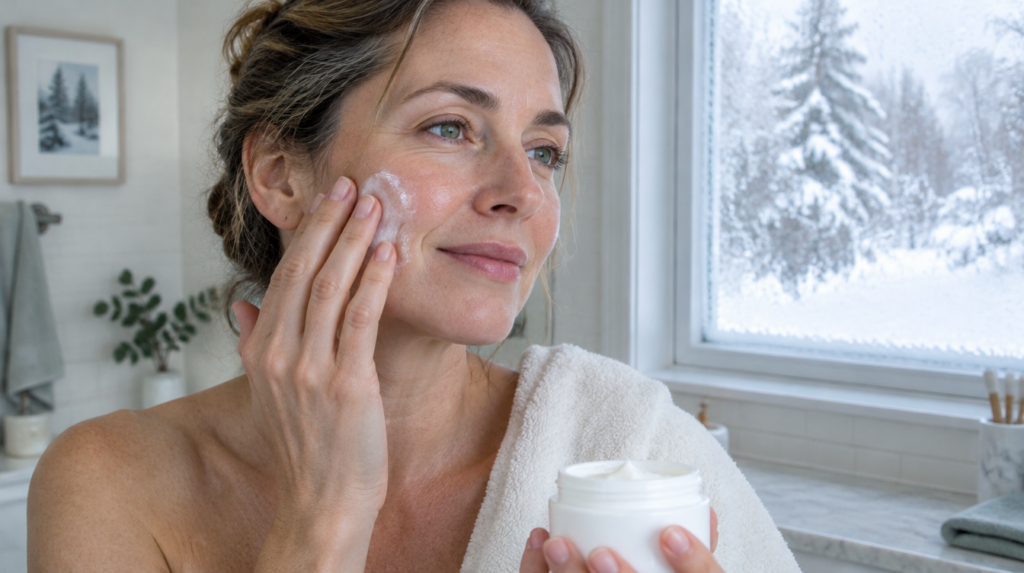
Most people notice it in January. The same moisturizer you have used since your thirties goes on at 7 a.m., and by lunch your cheeks feel tight, foundation sits in the lines around your nose, and there is a faint white flake near your eyebrows. The product did not change. Your skin did.
The best moisturizer for dry skin over 40 is a cream, not a lotion or gel, that does two jobs at once: it pulls water into the skin with humectants like glycerin or hyaluronic acid, and it seals that water in with lipids such as ceramides, cholesterol, fatty acids, shea butter or petrolatum. You do not need to spend $150 to get that combination. You do need to stop buying products built for oily, twenty-something skin.
Disclosure: Let’s Check It Now may earn a commission or have a business relationship with brands mentioned in this article. This never changes what we recommend.
Your skin barrier really does get weaker with age
This is not a marketing line. In a study published in the Journal of Clinical Investigation, researchers compared adults aged 20 to 30 with adults over 80. When they stripped the outer layer of skin with tape, the younger group needed about 31 strips before the barrier broke down. The older group broke down after about 18. A day later, young skin had recovered roughly half its barrier. Older skin had recovered 15 percent.
The same team found that the total amount of barrier lipid dropped by about 30 percent in aged skin in their animal model, while the mix of ceramides, cholesterol and fatty acids stayed in the same proportions. In plain terms, older skin does not run short of one magic ingredient. It runs short of the whole mortar between the bricks.
Forty is not eighty, of course. But the slide starts in midlife, and for women, the drop in estrogen around menopause speeds it up. Oil glands slow down, cells turn over more slowly, and the skin loses water faster through a thinner, leakier barrier. That is why a light gel that felt perfect at 32 now evaporates by mid-morning.
What to look for on the label
The American Academy of Dermatology keeps a short list of moisturizer ingredients it considers useful for dry skin, and it is refreshingly unglamorous. In its dermatologists’ tips for dry skin, the AAD names jojoba oil, dimethicone, glycerin, hyaluronic acid, lactic acid, lanolin, mineral oil, petrolatum and shea butter. It also recommends a cream or ointment over a lotion, because thicker formulas hold more moisture against the skin.
We read those ingredients in three groups, and a good over-40 moisturizer has something from each.
- Water magnets (humectants): glycerin, hyaluronic acid, urea, lactic acid. They draw water into the top layer of skin.
- Gap fillers (emollients and barrier lipids): ceramides, cholesterol, fatty acids, squalane, jojoba, shea butter. They patch the mortar your skin is losing.
- Seals (occlusives): petrolatum, dimethicone, lanolin, mineral oil. They slow the water from escaping again.
A hyaluronic acid serum on its own, with nothing on top, is the most common mistake we see. In dry indoor air, a humectant with no seal can leave skin feeling tighter an hour later. Put a cream over it, or skip the serum and buy a cream that already contains glycerin.
Fragrance is the other thing to check. The AAD advises choosing products labeled fragrance-free and steering clear of ones labeled unscented, which can still contain masking chemicals that irritate dry skin. If your face stings when you apply a new cream, fragrance is the first suspect.
How the main options compare
Here is how we would sort the shelf if your main problem is dryness and you are over 40. Prices are typical US ranges for a month or more of daily face use.
| Type | Typical price | Best for | Watch out for |
|---|---|---|---|
| Drugstore ceramide cream (tub) | $12 to $25 | Most dry skin, day or night, on a budget | Heavy feel under makeup |
| Plain petrolatum or ointment | $5 to $15 | Very dry or cracked patches, overnight | Too greasy for daytime on the whole face |
| Gel or water cream | $20 to $45 | Combination skin, humid summers | Usually not enough lipid for winter dryness |
| Rich night cream with lipids and vitamins | $50 to $90 | Skin that feels tight by morning | Fragrance and actives that can sting |
| Prestige barrier cream | $100 to $150+ | People who like a specific texture | You pay mostly for feel and brand |
| Daytime moisturizer with SPF 30+ | $15 to $70 | Your morning step | Some sunscreens feel drying on their own |
What we would skip
The $150 jar sold on a single star ingredient. Some prestige creams are excellent, and a few, like SkinCeuticals Triple Lipid Restore, publish a deliberate ceramide, cholesterol and fatty acid ratio that lines up with the research above. But the core lipids that make that formula work are also in many $15 tubs. If the main thing you are buying is a rare flower extract or a gold-flecked lid, your skin will not notice.
Foaming cleansers and hot showers. No cream can keep up with a cleanser that strips the barrier twice a day. The AAD suggests limiting showers to five to ten minutes in warm, not hot, water, and patting skin dry. At night, a cream cleanser or plain lukewarm water is enough for most dry faces.
Stacking actives while you are dry. Retinoids, strong acids and alcohol-heavy toners all have a place, but the AAD lists alcohol and retinoids among the things that make dry skin worse. If your face is flaking, pause them for two weeks, get the barrier comfortable, then reintroduce one at a time, two or three nights a week.
Lotions in a pump bottle. They feel nice, but most are mostly water. For a face that is tight by noon, you want something you scoop from a tub or squeeze from a thick tube.
The routine that makes any cream work better
Timing matters almost as much as the product. The AAD tells people with dry skin to apply moisturizer while the skin is still damp after washing, so the cream traps that water instead of landing on dry skin.
- Wash with lukewarm water and a non-foaming cleanser, once in the evening. In the morning, a splash of water is often enough.
- Pat, do not rub, and leave the skin slightly damp.
- Apply a pea-sized amount of cream to the face and a second one to the neck. Most people under-apply.
- In the morning, finish with a broad-spectrum SPF 30 or higher, or use a moisturizer that includes it.
- On very dry nights, press a thin layer of petrolatum over the driest spots after your cream.
Give it two weeks before judging. A single morning tells you how a cream feels. Two weeks of steady use tells you whether the tightness and flaking are actually easing.
Run a humidifier in the bedroom in winter, too. The AAD recommends one overnight, and it is the cheapest upgrade on this list. Just clean it regularly so it does not grow mold.
When a richer night cream earns its price
For most readers, a fragrance-free drugstore ceramide cream plus sunscreen is the whole answer. Where we think a richer night cream makes sense is the reader who already does all of the above and still wakes up tight, especially through winter or around menopause. Night is when you can wear a heavier texture without worrying about makeup.
One option in that category is the Multi Vitamin nourishing night cream from Skin Dead Sea, at $75. The brand describes it as a particularly rich formula meant to compensate for lipid insufficiency, with vitamins A, B5, C and E. That lines up with the lipid problem described above, and it is the kind of product we would use only at night. It will not fix a damaged barrier faster than a cheap ceramide cream, it does not replace sunscreen, and if you are already using a prescription retinoid or have reactive skin, read the full ingredient list and patch test on your jaw for a few nights first. If $75 is a stretch, skip it and spend $15 on a ceramide tub. Your skin will still improve.
If wrinkles bother you more than dryness, that is a different shopping list, and we cover it in our guide to anti-aging cream without retinol. For the full picture of which steps to keep and drop at this age, see our skincare routine for women over 40.
When dry skin is not just dry skin
If your face stays red, itchy or cracked after three or four weeks of a gentle routine, see a dermatologist. The AAD notes that extremely dry skin can be a sign of eczema or another skin condition, and that untreated dryness raises the risk of skin infection. Thyroid problems, diabetes and some medications, including diuretics, can also dry the skin from the inside, and no cream solves that.
Here is the one thing to do tonight: turn your favorite moisturizer around and read the first ten ingredients. If you cannot find at least one water magnet like glycerin and one lipid like ceramides, shea butter or petrolatum, that product was not built for your skin anymore. Replace it with one that has both, use it on damp skin for two weeks, and judge it then.
This article is for general information and is not medical advice. If you have a skin condition or take medication that affects your skin, talk to a dermatologist.
Sources: American Academy of Dermatology, dermatologists’ tips for dry skin. Ghadially et al., The aged epidermal permeability barrier, Journal of Clinical Investigation, 1995.
Moisturizer for dry skin over 40: frequently asked questions
A fragrance-free cream that combines a humectant such as glycerin or hyaluronic acid with barrier lipids such as ceramides, cholesterol, shea butter or petrolatum. Many good options cost $12 to $25 at a drugstore.
Usually not on its own. Hyaluronic acid draws water into the skin, but without a cream or occlusive on top, that water can escape again, especially in dry indoor air.
It helps if your skin feels tight by morning. A richer cream at night and a lighter moisturizer with SPF 30 or higher during the day is a common, sensible split.
Oil production slows, skin cells turn over more slowly and the barrier holds less lipid with age. For women, falling estrogen around menopause speeds these changes up.
If redness, itching, cracking or peeling lasts more than three or four weeks despite a gentle routine, or if large areas are affected. It can be eczema or another condition that needs treatment.