Snap-on veneers vs dentures: which one fixes your problem

Search “snap on veneers vs dentures” and you get pages that treat the two as rival products on the same shelf. They are not. A snap-on veneer is a thin resin shell that clips over teeth you still have. A denture is a set of artificial teeth that stands in for teeth you no longer have. One changes how your smile looks. The other gives you back the ability to chew.
So the honest answer to snap-on veneers vs dentures is that the choice is usually made for you by your mouth. If your teeth are all there but stained, chipped or gapped, a snap-on veneer is a cosmetic option worth a look. If teeth are missing, loose or the gums are sore, you are in denture or implant territory, and a veneer will only hide the problem for a while.
Disclosure: Let’s Check It Now may earn a commission or have a business relationship with brands mentioned in this article. This never changes what we recommend.
Two products that answer different questions
The confusion makes sense. Both are removable, both come from an impression of your mouth, and both get sold with before-and-after photos of a brighter smile. But the question each one answers is different.
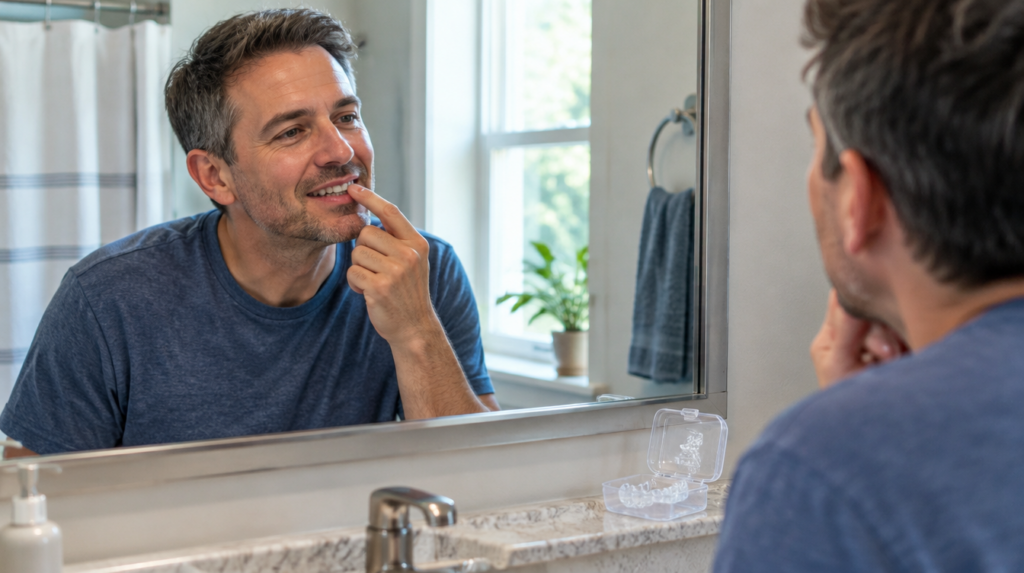
A snap-on veneer answers “how do I make the teeth I have look better without drilling?” It sits over your natural teeth like a very thin, tooth-colored mouthguard. Nothing gets removed from your enamel, and you can take it out at night.
A denture answers “how do I eat, speak and keep my face shape after losing teeth?” Cleveland Clinic lists four main kinds: full dentures that replace a whole arch, partial dentures that clip onto the teeth you have left, immediate dentures worn right after extractions, and implant-supported dentures anchored to posts in the jaw. Every one of them exists to replace function, not just appearance.
This is not a small group of readers. According to the CDC’s tooth loss fast facts, about 15% of Americans 65 and older have lost all their teeth, and 26% have eight or fewer. If you are in that second group, a cosmetic shell is not the conversation you need to have.
Start with one question: are your teeth still there?
Before comparing prices or reading reviews, look in the mirror and be blunt with yourself. Three situations cover most people who land on this question.
- All your teeth, unhappy with the look. Stains that whitening did not shift, a chipped front tooth, small gaps, uneven edges. This is the case snap-on veneers were built for.
- One or two gaps, the rest healthy. Some snap-on appliances carry a fake tooth to fill a single gap, which can work for photos and conversation. For chewing on that side, a partial denture, a bridge or an implant is the real answer.
- Several missing teeth, loose teeth, bleeding or receding gums. Skip the cosmetic route for now. A dentist needs to look at what is causing the loss first.
That last group matters most, because covering a problem is not the same as treating it. A shell over a loose tooth still leaves you with a loose tooth, and it adds one more surface where plaque can sit.
What dentures do that veneers cannot
The biggest difference is chewing. A well-fitted partial or full denture is designed to take bite pressure. Snap-on veneers are not. Dental clinics that write about them commonly advise taking them out to eat, or at least to skip hard, sticky and chewy foods while wearing them, because the shell is held on by fit alone and can crack or pop off.
The second difference is your jaw. Cleveland Clinic notes that the jawbone gradually shrinks where teeth are missing, which over years can give the cheeks a sunken look. Replacing the teeth, and especially anchoring them with implants, helps keep that bone working. A veneer that hangs a fake tooth over a gap does nothing for the bone underneath.
Dentures ask more of you in return. Cleveland Clinic says getting used to them takes weeks and sometimes months, with several fitting visits along the way. They should come out for at least eight hours a day, need a reline every one to two years, and typically last seven to ten years before they need replacing. That is a real commitment, and it is one reason people look for something simpler.
What snap-on veneers do well
For the first situation above, all teeth present but unhappy with how they look, a snap-on veneer has real advantages. There is no drilling and no enamel removed, so you can stop wearing it any time and your teeth are exactly as they were. Porcelain veneers, by contrast, usually involve shaving down the tooth surface, and that decision is permanent.
The cost gap is the other draw. Brands that sell these online make the impression process a home kit, which removes the chair time that drives up the price of dental work. Shiny Smile, for example, says its veneers are custom-made from an impression you take at home, fit over your own teeth and cover stains, gaps and chips without a dentist visit. If you have healthy teeth and want a removable cosmetic layer for events, photos or simply more confidence when you talk, custom snap-on veneers made from an at-home impression are a reasonable thing to try. Be clear on what they are, though. They are a removable cosmetic product, not a dental treatment, and they will not fix decay, gum disease or a tooth that moves.
If stains are your main complaint, try whitening before any shell. It is cheaper still, and our guide to teeth whitening without sensitivity walks through the options from gentlest to strongest.
The side-by-side
Here is how the main options compare on the things readers ask about most. Denture figures come from Pearl’s cost data, which it says draws on ADA fee survey numbers and was updated in May 2026.
| Snap-on veneers | Partial denture | Full denture | |
|---|---|---|---|
| Main job | Change how existing teeth look | Replace a few missing teeth | Replace a whole arch |
| Can you chew normally with it | Not recommended for hard or sticky food | Yes, after an adjustment period | Yes, after weeks or months of adjustment |
| Needs a dentist | No for at-home kits, though a checkup first is smart | Yes, several fitting visits | Yes, several fitting visits |
| Changes your natural teeth | No | Clasps rest on neighboring teeth | Replaces every tooth in the arch |
| Typical US cost | Varies by brand, usually far below porcelain veneers | About $1,250 to $3,280, average around $1,920 | Depends on materials, get a written quote |
| Insurance | Not covered | Many PPO plans pay about 50% after the deductible | Check your plan, partial coverage is common |
| Lifespan | Shorter, resin wears and can crack | Several years with relines | Seven to ten years per Cleveland Clinic |
What we would skip
Cheap boil-and-bite “instant teeth” from marketplace sites. These are one-size-fits-all trays you soften in hot water and press onto your teeth. The fit at the gum line is rough, they tend to look bulky, and they share every hygiene problem of a custom shell with none of the fit. If you want a removable cosmetic layer, a custom impression is the minimum.
Using a veneer to dodge a dentist you already know you need. If you have been putting off an appointment because of a sore tooth or bleeding gums, a cosmetic shell is the worst possible cover. An ADA News piece on the snap-on veneer trend points out that these shells can trap food particles against the tooth surface, which raises the risk of decay and gum disease. Over an untreated problem, that risk only grows.
DIY “veneers” made from craft resin or nail products, which still circulate on social media. The ADA piece flags enamel damage among the risks of at-home veneer projects. Nothing about them is worth the saving.
If you already wear a denture, can you add veneers?
People with a partial denture sometimes ask whether a snap-on shell can go over the remaining natural teeth to even out the color. We would not try it without a dentist in the loop. The partial’s clasps grip those same teeth, and a shell changes their shape. The cleaner route is to ask your dentist about matching the color of the partial to your teeth at the next reline, or about whitening the natural teeth first so the new partial is made to match.
Keeping either one clean
Whatever you choose, the hygiene rule is the same. Anything that sits against your teeth or gums all day collects bacteria. Cleveland Clinic recommends brushing dentures daily with a denture brush, soaking them overnight, and brushing your gums, tongue and any remaining teeth twice a day. The same habits apply to a snap-on shell: brush and floss your own teeth before you put it in, and clean the shell every time it comes out.
The tools matter too. A brush that sits damp in a cup by the sink picks up its own bacteria, a topic we looked at in our piece on whether your toothbrush can make you sick.
The one step we would take this week: book a regular dental checkup before you buy anything. Ask the dentist one direct question, “Are my teeth and gums healthy enough for a cosmetic cover, or do I need a replacement for missing teeth?” That answer tells you which half of this article applies to you, and it costs far less than buying the wrong fix.
This article is for general information and is not medical or dental advice. Talk to a dentist about your own teeth and gums before starting any treatment.
Sources: Cleveland Clinic, Dentures. CDC, Tooth Loss fast facts. ADA News, DIY veneers. Pearl, partial denture costs.
Snap-on veneers vs dentures: frequently asked questions
No. Snap-on veneers are a cosmetic cover for teeth you still have. Some can carry a fake tooth over a single gap for appearance, but they are not built for chewing. If several teeth are missing, a partial or full denture, a bridge or implants are the options to discuss with a dentist.
Many dentists advise removing them for meals, or at least avoiding hard, sticky and chewy foods while wearing them, because they are held on by fit and can crack or come loose. Dentures, once you have adjusted to them, are designed for eating.
They do not require removing enamel, which is a plus. The main risk is hygiene. An ADA News piece notes they can trap food against the tooth surface, which raises the risk of decay and gum disease. Clean your teeth before putting them in and do not wear them over untreated problems.
Pearl’s cost data, based on ADA fee survey numbers, puts partial dentures at about $1,250 to $3,280 in the US, with an average around $1,920 before insurance. Snap-on veneer prices vary by brand and are usually far below that, but they do a different job.
No, it is an editorial comparison. We may earn a commission or have a business relationship with brands we mention, as our disclosure at the top says, and that never changes what we recommend.