How to Sanitize a Toothbrush: What Works, What Ruins It
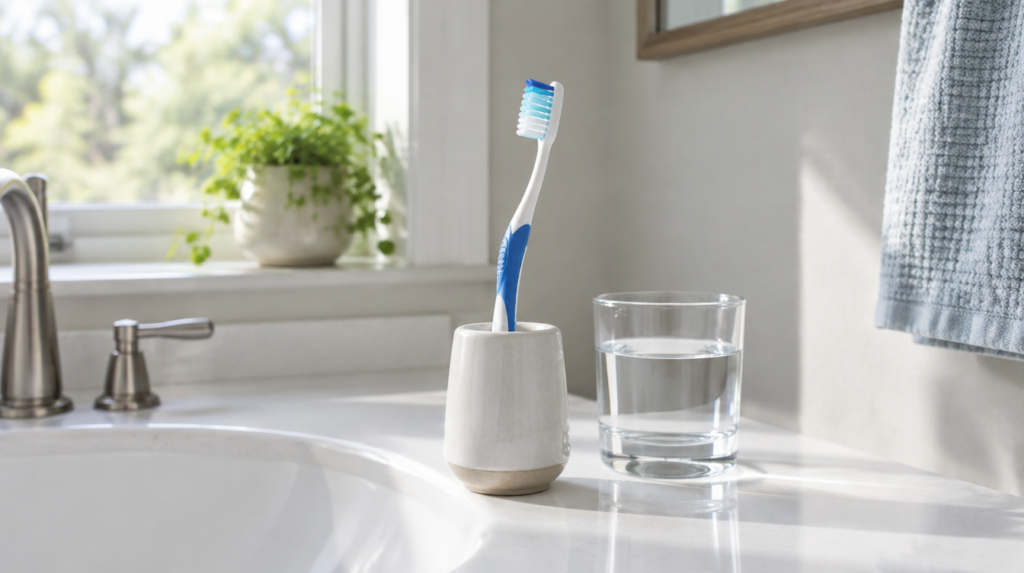
Two brushings a day add up to about four minutes. The other 23 hours and 56 minutes, your toothbrush sits in a cup by the sink, often still wet. That idle time is where most of the germ story happens, and it is the part most advice on how to sanitize a toothbrush rushes past on the way to vinegar soaks and boiling pots.
Our short answer: rinse the brush hard under the tap after every use, stand it upright where air reaches the bristles, and replace it every three to four months. If you want one extra step, a soak in drugstore 3% hydrogen peroxide is the cheapest method with the best results in the small studies we read. Skip the dishwasher, the microwave and the boiling pot. They mostly ruin the brush.
Disclosure: Let’s Check It Now may earn a commission or have a business relationship with brands mentioned in this article. This never changes what we recommend.
Start with what the evidence actually says
The American Dental Association is blunter than most product pages. Its guidance on toothbrush care says brushes have been shown to harbor bacteria, but there is no evidence that these bacteria cause adverse health effects.
That is not the same as saying the bacteria are harmless. It means nobody has shown that a sanitized brush keeps you healthier than one that is rinsed and dried properly. So we treat sanitizing as optional hygiene, not as medicine. It earns its place in some households, which we get to below. In others it is effort spent on the wrong problem, because the brush lives in a closed cap or a crowded cup.
The daily routine does most of the work
The ADA’s instructions fit on an index card: rinse thoroughly after each use, store the brush upright, let it air dry, and never share it. The detail people miss is the cover. The ADA warns that a moist brush kept in a closed container grows more microbes than one left in open air.
Those snap-on caps are fine inside a suitcase. On the counter every night, they lock in the moisture you are trying to get rid of. If you take one thing from this article, take the cap off.
Here is the routine we follow, and it takes under a minute:
- Rinse under running water for about 10 seconds while rubbing the bristles with your thumb to push out paste and debris.
- Flick the brush a few times over the sink so it is not dripping.
- Stand it head-up in a holder, not lying on the counter or in a drawer.
- Keep family brushes from touching. A holder with separate slots costs a few dollars and ends the cup pile-up.
Five sanitizing methods, ranked
If you want an extra step, this is how the common options compare. The ranking draws on two small lab studies and the ADA’s guidance. Both studies counted bacteria on bristles. Neither tracked whether anyone got sick, so read every result below as “removes the most germs from the brush” and nothing more.
| Method | How to do it | What the research found | Cost | Our verdict |
|---|---|---|---|---|
| 3% hydrogen peroxide | Cover the head for 10 to 20 minutes, then rinse with water | 100% efficacy in a 50-child study, largest percentage drop in a 55-person study | A few cents per soak | Best overall |
| Antiseptic mouthwash (Listerine) | Fresh pour, cover the head 10 to 20 minutes, rinse | 100% efficacy in the child study, effective in the adult study | Cents per soak | Good if it is already in your cabinet |
| White vinegar | Full strength, 10 to 20 minutes, rinse well | Effective in the 55-person study | Pennies | Works, smells, not our first pick |
| UV-C sanitizer | Place the head in the device per its instructions | Ultraviolet light cut bacterial counts in the 55-person study | One-time device purchase | Convenient, choose an FDA-cleared model |
| Microwave, dishwasher, boiling | Not recommended | Microwaving reduced bacteria, but the ADA says high heat may damage the brush | Free | Skip |
Hydrogen peroxide is our pick
Two studies carry most of the weight here. In a 2011 study in Contemporary Clinical Dentistry, researchers gave 50 boys aged 8 to 11 new brushes, split them into five groups of 10, and cultured the brushes after use. Brushes treated with 3% hydrogen peroxide, Listerine or a chlorhexidine rinse came back clean in every case. Dettol worked 40% of the time, and plain water did the worst. The authors named peroxide the most economical and effective option of the group.
A 2022 study in Cureus went wider. It collected brushes from 55 volunteers after two weeks of use and tested ten methods against a tap-water rinse. Every method cut bacteria. Peroxide produced the largest percentage reduction. Glutaraldehyde, a hospital-grade disinfectant you should not be using at home, gave the biggest drop in raw counts.
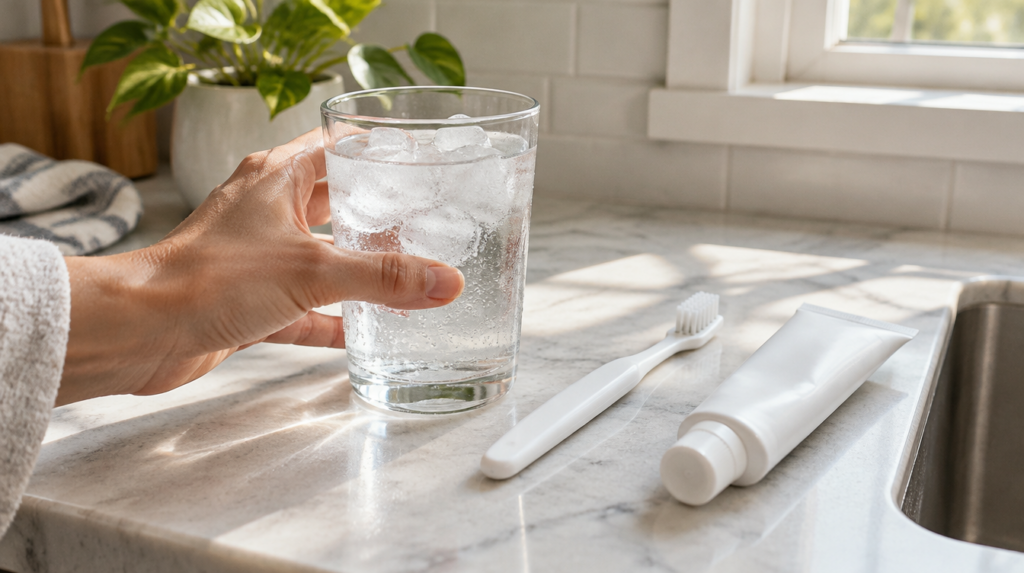
To do it, pour enough 3% peroxide from the ordinary brown drugstore bottle to cover the bristles, about a quarter cup in a small glass. Leave it 10 to 20 minutes, rinse the brush well under the tap, and pour the solution out. A 32-ounce bottle usually runs a dollar or two, which works out to a few cents a soak. Once or twice a week is plenty. Do not reach for stronger peroxide sold for hair or cleaning. The studies used 3%.
Mouthwash works if it is already in your cabinet
Listerine matched peroxide in the child study and held up in the adult one, so if a bottle is already under your sink, use it. Two rules matter. Pour a fresh cup each time, and give each person’s brush its own cup. Dunking a whole family’s brushes in one shared glass of mouthwash moves bacteria from one brush to the next, which is the opposite of the goal.
Vinegar is cheap but not our first choice
Full-strength white vinegar reduced bacteria in the Cureus study, and it costs almost nothing. The catch is practical. The smell lingers unless you rinse thoroughly, and peroxide did better in the same study for about the same price. We would only use vinegar if it is the one thing in the house.
Where UV sanitizers fit
A UV-C sanitizer is the only option here that does not leave a cup of liquid on the counter. Ultraviolet light was one of the methods that cut bacterial counts in the 55-person study, and the ADA’s advice if you buy a sanitizing device is short: pick one cleared by the FDA. We have covered one of these devices before, the Bril UV-C sterilizer, which the brand says sterilizes a brush head in about three minutes with no chemicals, and you can read our full look at how it works. A device like this suits people who share a small bathroom, travel a lot, or know they will never remember a weekly soak. If you already rinse, air dry and replace on schedule, a bottle of peroxide gets you most of the way for far less.
Skip the heat methods
Boiling water, the microwave and the top rack of the dishwasher all kill germs. They also soften nylon bristles and can warp the handle. The ADA says plainly that microwaving or dishwashing a toothbrush is not recommended because the heat may damage it. A brush with splayed bristles cleans worse along the gumline, so you end up trading a theoretical germ problem for a real brushing problem.
Replacing the brush beats any soak
The ADA’s rule is to replace a toothbrush every three to four months, or sooner once the bristles look matted or frayed. Electric brush heads follow the same rule. In practice most people keep a brush far longer, because nobody remembers when they opened it.
Our fix is low-tech. Put a strip of tape on the handle with the date you started it. When the date is three months old, the brush goes. We also swap brushes after a bad cold, flu or strep throat. The evidence that this prevents reinfection is thin, but a new manual brush costs a few dollars and the decision takes no thought.
A frayed brush is often a pressure problem too. If you scrub hard because you are chasing whiter teeth, our guide to teeth whitening without damaging enamel explains why force does not help and what does.
When the extra step is worth it
Sanitizing makes the most sense where brushes are crowded or someone is sick. Think of a family with four brushes in one cup, a dorm bathroom, a house going through a stomach bug, or a teenager with braces whose brush collects more debris. In those cases a weekly peroxide soak is a reasonable habit that costs almost nothing.
If someone in your home has a weakened immune system, for example during chemotherapy, ask their care team for specific instructions instead of relying on general advice. For everyone else, storage and replacement matter more than any soak.
Small mistakes that cancel out the effort
The most common one is soaking a brush and then snapping a cap on it while it is still wet. The second is reusing the same cup of peroxide or mouthwash for days. Old solution collects whatever came off the last brush, so pour it out after every soak.
Do not mix sanitizers either. Peroxide followed by vinegar in the same cup is not a stronger cleaner, and combining household chemicals is a bad habit to start in a room this small. Finally, sanitizing a brush that is eight months old misses the point. If the bristles bend outward, no soak will make it clean your teeth properly, and if sensitivity is part of the picture, our piece on teeth whitening without sensitivity covers the brushing habits that help.
Tonight, take the cap off your brush, stand it upright in its own slot, and write today’s date on a piece of tape around the handle. That one change does more than any gadget you could buy.
This article is for general information and is not medical or dental advice. If you have a medical condition or a weakened immune system, ask your dentist or doctor how to care for your toothbrush.
How to sanitize a toothbrush: frequently asked questions
Rinse it and let it air dry upright after every use. That is the only daily step the ADA asks for. If you want to sanitize, a 10 to 20 minute soak in 3% hydrogen peroxide once or twice a week is plenty for most households. There is no official sanitizing schedule.
There is no need. The studies we read used short soaks and still saw large drops in bacteria. A long soak adds nothing we can point to and may wear the bristles faster. Keep it to 10 to 20 minutes, rinse well, and pour the solution out.
Boiling kills germs, but the ADA does not recommend high-heat methods such as microwaving or the dishwasher because heat may damage the brush. Softened, splayed bristles clean worse, so we skip heat altogether.
The ADA’s general rule is every three to four months, or sooner if the bristles are frayed. Evidence that a new brush prevents reinfection is limited, but brushes are cheap, so swapping one after the flu or strep throat is a reasonable choice.
They are convenient and ultraviolet light did reduce bacteria in a 2022 lab study. They have not been shown to prevent illness. If you buy one, the ADA advises choosing a device cleared by the FDA. If you already rinse, dry and replace on time, a peroxide soak costs far less.